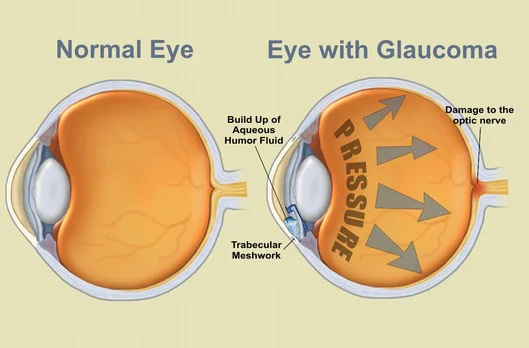
Glaucoma is a group of eye diseases characterized by increased intraocular pressure (IOP) that damages the optic nerve, which is essential for vision. Often called the “silent thief of sight,” glaucoma can gradually lead to irreversible vision loss or blindness if untreated. It typically affects peripheral vision first, progressing slowly and subtly, which is why regular screening and early diagnosis are crucial to preserving eyesight.
There are several main types of glaucoma:
Primary Open-Angle Glaucoma: The most common type where the drainage canals of the eye become clogged over time, leading to gradual pressure buildup. It develops slowly and painlessly.
Angle-Closure Glaucoma: A less common but more urgent form where the eye's drainage angle closes suddenly, causing a rapid rise in eye pressure. This can cause severe eye pain and vision loss.
Normal-Tension Glaucoma: Optic nerve damage occurs despite normal eye pressure levels due to poor blood flow or other factors.
Congenital Glaucoma: A rare form present from birth caused by abnormal eye development.
Secondary Glaucoma: Resulting from injury, inflammation, steroids, or other eye conditions.
Glaucoma is often asymptomatic in its early stages. When symptoms appear, they may include:
Loss of peripheral or side vision, usually gradual
Tunnel vision in advanced stages
Severe eye pain and headache (in angle-closure glaucoma)
Blurred vision or halos around lights
Nausea and vomiting associated with acute angle-closure glaucoma.
The main cause of glaucoma is elevated intraocular pressure due to insufficient drainage of aqueous humor, the fluid inside the eye. Risk factors include:
There are several main types of glaucoma:
Primary Open-Angle Glaucoma: The most common type where the drainage canals of the eye become clogged over time, leading to gradual pressure buildup. It develops slowly and painlessly.
Angle-Closure Glaucoma: A less common but more urgent form where the eye's drainage angle closes suddenly, causing a rapid rise in eye pressure. This can cause severe eye pain and vision loss.
Normal-Tension Glaucoma: Optic nerve damage occurs despite normal eye pressure levels due to poor blood flow or other factors.
Congenital Glaucoma: A rare form present from birth caused by abnormal eye development.
Secondary Glaucoma: Resulting from injury, inflammation, steroids, or other eye conditions.
Glaucoma is often asymptomatic in its early stages. When symptoms appear, they may include:
Loss of peripheral or side vision, usually gradual
Tunnel vision in advanced stages
Severe eye pain and headache (in angle-closure glaucoma)
Blurred vision or halos around lights
Nausea and vomiting associated with acute angle-closure glaucoma.
The main cause of glaucoma is elevated intraocular pressure due to insufficient drainage of aqueous humor, the fluid inside the eye. Risk factors include:
Treatment for glaucoma aims to lower intraocular pressure (IOP) and protect the optic nerve from further damage, thereby preventing or slowing the progression of vision loss. Although any vision already lost to glaucoma cannot be restored, timely and consistent treatment can preserve remaining vision and significantly improve quality of life.
The cornerstone of glaucoma treatment involves several approaches:
Medications: Prescription eye drops are the most common form of treatment. They work by either reducing the production of aqueous humor (the fluid inside the eye) or by improving its drainage through natural pathways. Types of eye drops include prostaglandin analogs, beta-blockers, alpha-adrenergic agonists, and carbonic anhydrase inhibitors. In some cases, oral medications may be prescribed if eye drops alone are insufficient in controlling eye pressure. It is critical that patients adhere strictly to their medication schedules, as consistency directly affects treatment effectiveness. Some patients may experience side effects such as eye irritation or systemic symptoms, which should be discussed with their eye care provider.
Laser Therapy: Laser treatments are minimally invasive options used to enhance fluid drainage or decrease fluid production. Selective Laser Trabeculoplasty (SLT) is commonly used for open-angle glaucoma. It targets the trabecular meshwork with laser energy to stimulate improved fluid outflow, effectively lowering eye pressure and often reducing the need for medications. Laser Peripheral Iridotomy (LPI) creates a small hole in the iris, allowing fluid to flow more freely in cases of angle-closure glaucoma and preventing sudden pressure spikes. Another laser procedure, Cyclophotocoagulation, targets the ciliary body to reduce aqueous humor production. Laser procedures offer the benefits of being quick, outpatient-based, and generally well tolerated.
Surgical Procedures: When medications and laser therapy do not adequately control eye pressure, surgery becomes necessary. Traditional surgery, such as trabeculectomy, involves creating a new drainage pathway by making a small flap in the sclera (white part of the eye) to divert fluid away from the eye, reducing pressure. Glaucoma drainage implants or shunts are devices implanted to help fluid escape the eye. More recently, Minimally Invasive Glaucoma Surgery (MIGS) techniques—using tiny micro-stents like the iStent—have emerged, offering effective pressure reduction with faster recovery times and fewer complications, particularly in mild to moderate cases. Surgical interventions are performed under specialized care and require follow-up to monitor effectiveness and detect any complications.
Regular Monitoring: Glaucoma requires lifelong monitoring because it is a chronic disease. Regular eye exams include measuring eye pressure, assessing the optic nerve with imaging and visual field testing to monitor disease progression. Adjustments to treatment plans are made accordingly to protect vision. Patient education and adherence to follow-ups are vital components of successful glaucoma management.

Glaucoma is not curable, but it can be effectively managed to prevent or slow vision loss.
People over 60, those with family history, high eye pressure, diabetes, or using steroids have higher risk.
Through comprehensive eye exams including eye pressure measurement, optic nerve evaluation, and visual field tests.
There are usually no early symptoms; vision loss starts at the periphery unnoticed.
Yes, untreated glaucoma is a leading cause of irreversible blindness worldwide.
Expert Ophthalmologist & Eye Surgeon. Specializing in Advanced Cataract and Comprehensive Vision Care. Book Your Consultation Today.
Designed With 🤍 by Walk Digitally