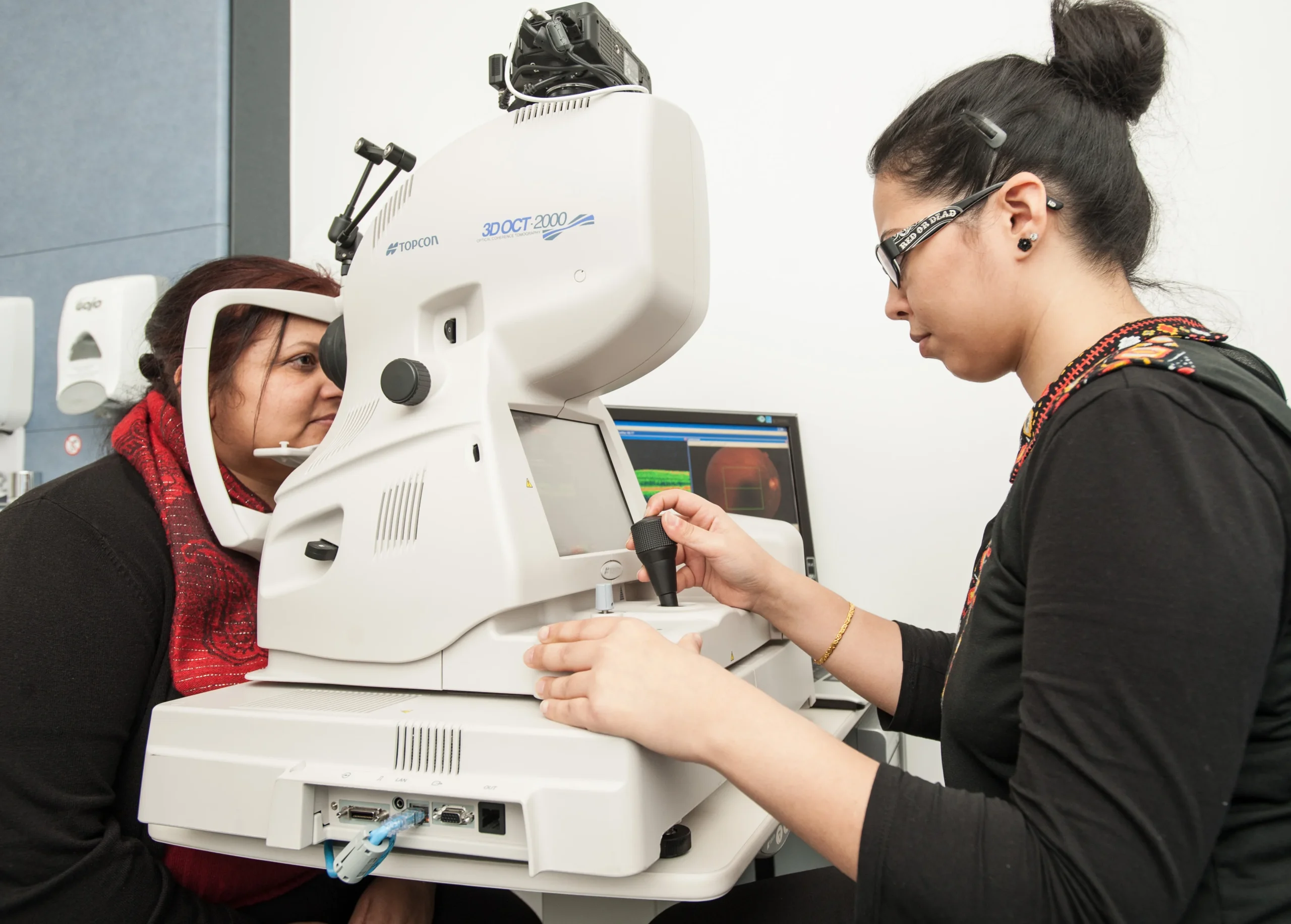
Diabetic Retinopathy Screening

What is Diabetic Retinopathy Screening?

Diabetic Retinopathy Screening is a crucial eye health examination designed to detect early signs of diabetic retinopathy, a common diabetes-related eye condition that affects the retina. This screening helps identify changes and damage in the small blood vessels at the back of the eye caused by high blood sugar levels. Early detection through screening can prevent or reduce vision loss by enabling timely treatment. The screening typically consists of a visual acuity test and a detailed retinal examination using specialized imaging techniques such as fundus photography or optical coherence tomography (OCT)

Why Choose us

What's Our Specialty

  • Types of Diabetic Retinopathy Screening
  • Symptoms of Diabetic Retinopathy
  • Causes of Diabetic Retinopathy

There are several methods for diabetic retinopathy screening depending on available resources and technology:

Dilated Eye Exam: Eye drops are used to widen the pupil so the doctor can examine the retina and optic nerve thoroughly for signs of damage.

Fundus Photography: Retinal images are captured using specialized cameras without necessarily dilating the pupils. These images are analyzed by trained graders or using AI to detect retinopathy.

Optical Coherence Tomography (OCT): A non-invasive imaging test that shows detailed cross-sections of the retina to detect swelling and fluid accumulation.

Teleophthalmology Screening: Remote evaluation of retinal images taken at local clinics, providing access for patients in underserved or rural areas.

In its early stages, diabetic retinopathy often has no symptoms. As it progresses, warning signs may include:

  • Blurred or fluctuating vision

  • Seeing floaters or spots

  • Dark or empty areas in the visual field

  • Difficulty seeing at night

  • Gradual vision loss if untreated
    Regular screening is essential since symptoms may be subtle or absent in initial stages.

The root cause of diabetic retinopathy is prolonged high blood sugar levels, which damage the tiny blood vessels that nourish the retina. This damage causes blood vessels to leak fluid or bleed, leading to swelling, scarring, and impaired vision. The retina may try to grow new abnormal blood vessels, which are fragile and bleed easily, further worsening the condition. Other factors increasing risk include high blood pressure, high cholesterol, duration of diabetes, pregnancy, smoking, and certain ethnic backgrounds.

  • Types of Diabetic Retinopathy Screening
  • Symptoms of Diabetic Retinopathy
  • Causes of Diabetic Retinopathy

There are several methods for diabetic retinopathy screening depending on available resources and technology:

Dilated Eye Exam: Eye drops are used to widen the pupil so the doctor can examine the retina and optic nerve thoroughly for signs of damage.

Fundus Photography: Retinal images are captured using specialized cameras without necessarily dilating the pupils. These images are analyzed by trained graders or using AI to detect retinopathy.

Optical Coherence Tomography (OCT): A non-invasive imaging test that shows detailed cross-sections of the retina to detect swelling and fluid accumulation.

Teleophthalmology Screening: Remote evaluation of retinal images taken at local clinics, providing access for patients in underserved or rural areas.

In its early stages, diabetic retinopathy often has no symptoms. As it progresses, warning signs may include:

  • Blurred or fluctuating vision
  • Seeing floaters or spots
  • Dark or empty areas in the visual field
  • Difficulty seeing at night
  • Gradual vision loss if untreated
    Regular screening is essential since symptoms may be subtle or absent in initial stages.

The root cause of diabetic retinopathy is prolonged high blood sugar levels, which damage the tiny blood vessels that nourish the retina. This damage causes blood vessels to leak fluid or bleed, leading to swelling, scarring, and impaired vision. The retina may try to grow new abnormal blood vessels, which are fragile and bleed easily, further worsening the condition. Other factors increasing risk include high blood pressure, high cholesterol, duration of diabetes, pregnancy, smoking, and certain ethnic backgrounds.

Speciality

Treatment for Diabetic Retinopathy

Treatment depends on the severity and type of diabetic retinopathy:

Laser Photocoagulation: Laser therapy is used to seal leaking blood vessels and reduce abnormal vessel growth, effectively preventing severe vision loss.

Anti-VEGF Eye Injections: Medications injected into the eye block growth factors causing vessel leakage and swelling, commonly used for diabetic macular edema.

Steroid Implants: In some cases, steroid medications placed inside the eye help reduce inflammation and swelling.

Vitrectomy Surgery: Surgical removal of blood or scar tissue from the eye in advanced cases to restore vision.

Blood Sugar Management: Controlling diabetes and associated risk factors is critical to prevent progression of retinopathy.

Appointment BG Image

Other Treatments

Frequently Asked Questions

Who should get diabetic retinopathy screening?

All individuals with diabetes, including type 1, type 2, and gestational diabetes, should have regular eye screenings starting shortly after diagnosis.

Typically, annual screening is advised, but frequency may increase if early signs of retinopathy are detected or other risk factors exist.

Does diabetic retinopathy cause symptoms right away?

No, early diabetic retinopathy often has no symptoms, which is why regular screening is crucial for early detection.

Can diabetic retinopathy be cured?

While there is no cure, treatments can effectively control the condition and prevent or delay vision loss.

What happens if diabetic retinopathy is not treated?

Untreated diabetic retinopathy can lead to severe vision impairment and even blindness due to retinal damage.

Book your appointment today

Get expert eye care tailored for you.

Book your appointment today

Get expert eye care tailored for you.